Toronto's architectural landscape is a unique blend of modern glass towers and historic masonry structures. For the owners of high-rise commercial buildings, heritage condominiums, and residential estates, the maintenance of this brickwork is a constant battle against the elements. The Greater Toronto Area's unique climate—characterized by extreme temperature swings and high humidity—creates a particularly punishing environment for masonry.
The Freeze-Thaw Cycle: A Masonry Killer
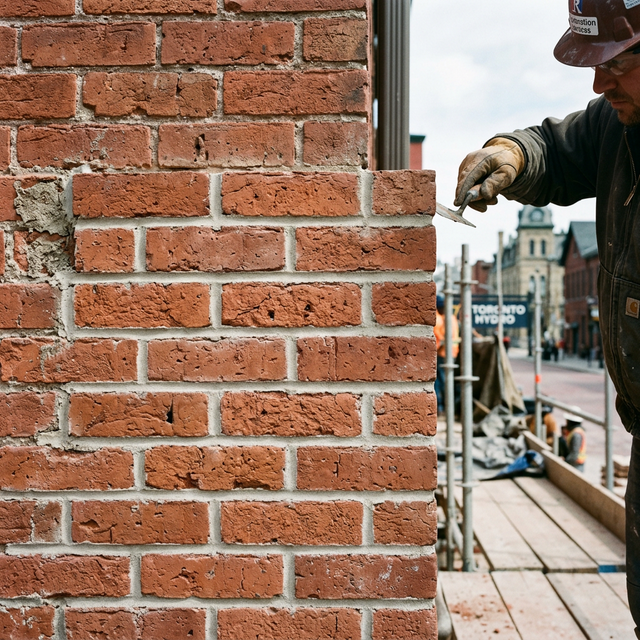
The single most destructive force for masonry in the GTA is the freeze-thaw cycle. Brick is a porous material that naturally absorbs a small amount of moisture. When temperatures drop below freezing, the water trapped within the brick and mortar joints expands as it turns to ice. This internal expansion creates immense pressure, leading to small cracks and, eventually, a process called spalling, where the face of the brick literally breaks off.
The Art and Science of Repointing
When mortar joints begin to crumble, crack, or recede, the solution is repointing. This isn't simply a matter of slapping new cement into the gaps. Historic buildings often used lime-based mortars that were designed to be softer than the surrounding brick. This allows the building to 'breathe' and move slightly with thermal changes.
If a modern, rigid Portland-cement-based mortar is used on a historic building, the mortar won't give. Instead, the pressure will be transferred entirely to the brick, causing expensive and irreversible damage. Professional masonry restoration requires a careful assessment of the existing mortar's composition and a custom match to ensure compatibility.
Why Facade Inspections Matter
For property managers of commercial high-rises, facade maintenance isn't just about aesthetics—it's about public safety and legal liability. Loose bricks or crumbling decorative elements can fall, creating a significant risk to pedestrians. Regular visual inspections, often conducted via swing stages or high-resolution drone photography, allow for the early detection of:
- Vertical cracking indicating structural settlement.
- Efflorescence (salt buildup) indicating chronic moisture penetration.
- Rusted lintels or shelf angles causing 'steptoe' cracking.
- Sealant failure around window perimeters.
Conclusion
Masonry is designed to last for centuries, but only if it is correctly maintained. By addressing mortar failure and moisture penetration early, GTA property owners can avoid the massive costs of full brick replacement and ensure their heritage assets continue to stand strong for another hundred years.
Worried About Your Building's Masonry?
Our masonry restoration experts specialize in historic brickwork and commercial facade repairs across the GTA. Protect your investment with a professional assessment.
Request a Masonry Assessment